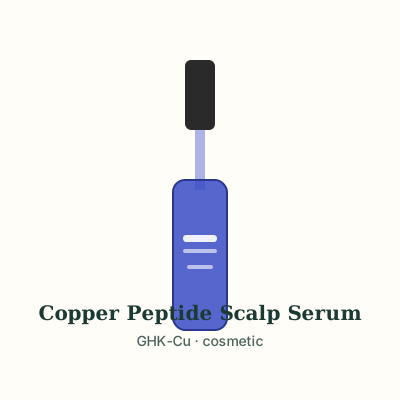
Copper peptide scalp serum
A topical cosmetic scalp serum with copper peptides (GHK-Cu) to support scalp condition and the look and feel of hair. A cosmetic, not a hair-loss product.
Purchase option
- GHK-Cu copper peptides — cosmetic scalp serum
- Topical — for scalp condition & the look of hair
- Honest framing — a cosmetic, not a hair-loss product
- Ships across the US
What copper peptides do as a cosmetic for hair
As a cosmetic ingredient (Copper Tripeptide-1), GHK-Cu is used in scalp serums to support scalp condition and the appearance and feel of hair — the look of fuller, healthier-seeming hair.1 Used this way it’s a cosmetic, the same category as a conditioning scalp product, not a medicine.
What the evidence actually shows
Being straight about this matters. Most GHK-Cu research is skin and skin-repair science; the hair-follicle data is small, older, and mostly from cell or animal studies.1,2 Notably, the most-cited “copper peptide hair” study actually tested a different peptide (AHK-Cu).2 So copper peptides are best seen as an unproven, supportive cosmetic ingredient for the scalp — not a proven way to change hair.
Important, and honest. Copper peptides are not FDA-approved to treat hair loss or to grow hair, and this is a cosmetic scalp product, not a hair-loss treatment. The FDA-approved options for pattern hair loss are minoxidil and finasteride, which are different products.2 If you’re dealing with hair loss, talk to a doctor or dermatologist.
How a copper peptide scalp serum is used
Applied topically to the scalp as directed, usually on clean, towel-dried hair. Some people use it alongside other routines. Patch-test if your skin is sensitive, and follow the specific product’s directions.
Join the waitlist
Our copper peptide scalp serum isn’t in stock yet. Tell us you’re interested and how many you’d want, and we’ll email you when it’s available — no charge now.
Frequently asked questions
Will a copper peptide serum change my hair?
There’s no strong human evidence that copper peptides grow hair. They’re a cosmetic scalp ingredient with preliminary, mostly non-human data — not a proven hair-growth product.2
Is this an approved way to address hair loss?
No. Copper peptides are not FDA-approved for hair loss. The approved options are minoxidil and finasteride, which are different products.2
What can a copper peptide scalp serum actually do?
As a cosmetic, it supports scalp condition and the look and feel of hair. Set expectations at cosmetic level, and give it consistent use.1
Is GHK-Cu the same as AHK-Cu?
No — they’re different copper peptides. Some hair research used AHK-Cu, not GHK-Cu, which is one reason the copper-peptide-for-hair evidence is easy to overstate.2
Copper peptide (face) serum Skincare home
- GHK-Cu (copper tripeptide-1) — hair follicle and skin research (mostly cell/animal; hair evidence limited). PubMed / U.S. National Library of Medicine. View research.
- GHK-Cu is regulated as a cosmetic ingredient, not an FDA-approved hair-loss drug; minoxidil and finasteride are the approved options. PubMed / NLM. View research.